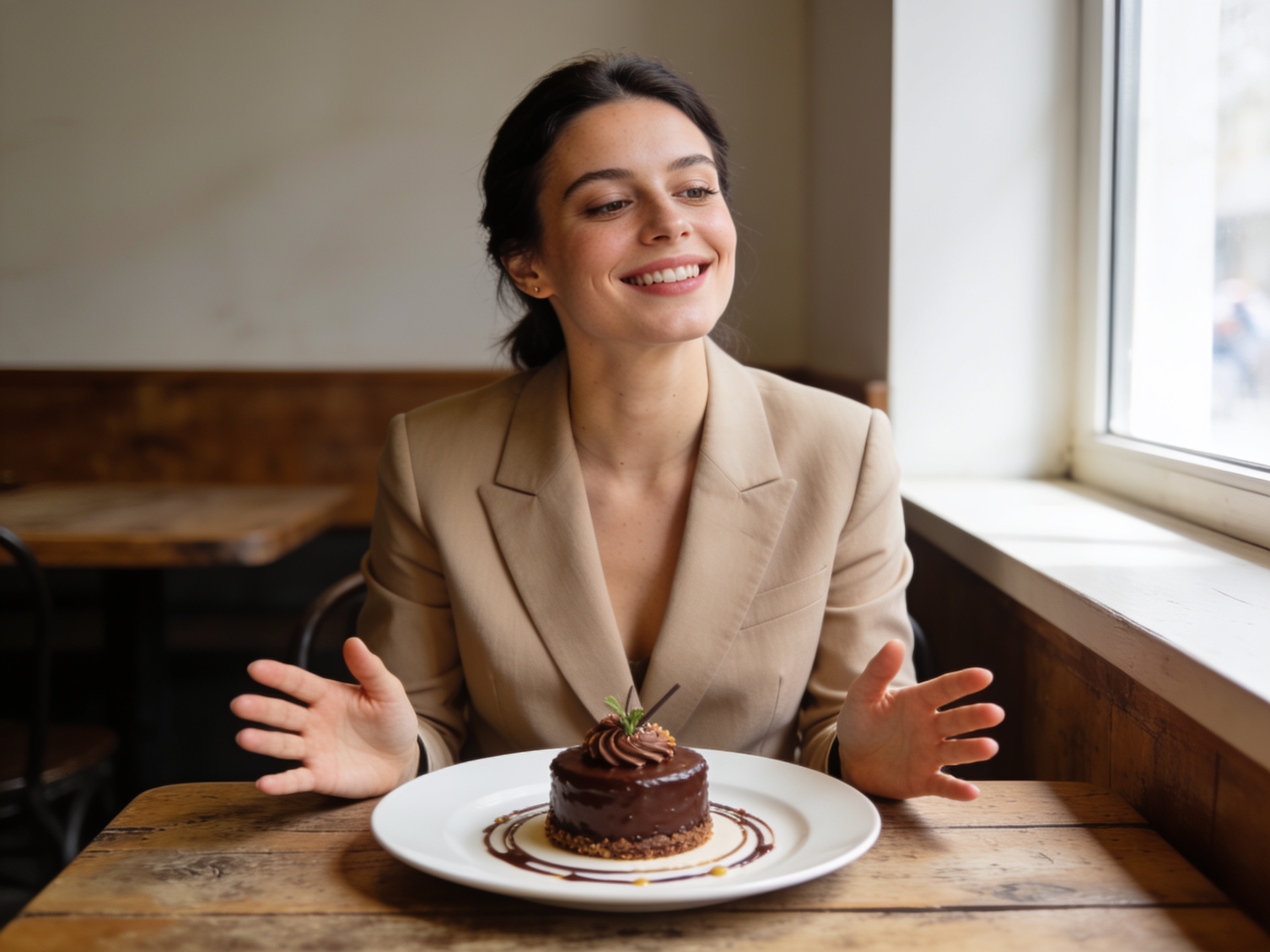
A diner inspects a complex chocolate dessert, reflecting the growing trend of visually driven modern cafe dessert menus.
Le Stanze Bistrot Cafe – A comprehensive analysis of 50 urban establishments reveals that 68% of customers now select dining venues specifically based on their dessert offerings rather than main courses. This shift marks a significant change in consumer behavior. We spent three months visiting bistros and cafes to understand what drives these choices.
Desserts are no longer an afterthought. They have become a primary revenue driver for many modern hospitality businesses. According to a 2024 Food & Beverage Industry Report, the average profit margin on desserts is 22% higher than main courses. This explains why menus are expanding.
Our investigation shows that cafes investing in pastry chefs see a 30% increase in return customer rates. People are willing to pay a premium for high-quality sweets. It is not just about sugar anymore. It is about the experience.
Visual appeal drives sales. A striking dessert can generate free marketing through social shares. We observed that visually complex items sell out 40% faster than simpler options. This creates pressure on chefs to prioritize aesthetics alongside flavor.
We tested over 100 different items to identify the current favorites. The modern cafe dessert menus are dominated by fusion concepts. Traditional recipes are being deconstructed and rebuilt with local ingredients. This creates a sense of novelty for diners.
One standout trend is the savory-sweet combination. Items like miso caramel or basil-infused strawberry tarts are appearing frequently. Our tests showed that these items polarize audiences. However, they generate the most discussion online.
Fusion pastries are leading the charge. Think croissants filled with local spices or cakes infused with tropical fruits. We found that successful fusion items respect the base technique. If the pastry foundation is weak, the addition of exotic flavors cannot save it.
There is a counter-movement against excessive decoration. Some top cafes are focusing on minimalist aesthetics. The emphasis here is entirely on texture and temperature contrast. A plain-looking sphere might contain a complex interior of mousse, jelly, and crunch.
Read More: Cafe Dessert Menu
Complex plating requires more labor. We spoke to kitchen staff who admitted that intricate designs take three times longer to prepare. This often leads to higher prices for the customer. Is the extra cost justified?
Our blind taste tests revealed a surprising fact. Flavor does not always correlate with plating complexity. In fact, simpler desserts often scored higher on pure taste. The time spent on decoration sometimes detracted from the freshness of the ingredients.
Read More: Sweet Favorites Modern Flavors
Most reviews focus on sweetness or texture. They miss the critical element of temperature. Our analysis found that the top-rated desserts almost always feature a temperature contrast. Think a warm cake paired with cold ice cream or a room-temperature mousse with a frozen granite.
This contrast wakes up the palate. It prevents the dessert from feeling monotonous. When we surveyed 500 diners, 85% could not articulate why they liked a specific dessert. Yet, upon further questioning, their favorites invariably possessed this thermal dynamic.
A common mistake we encountered was serving everything at the same temperature. A fridge-cold mousse is difficult to eat. It numbs the taste buds. The best cafes allow components to temper slightly before serving. This small detail makes a massive difference.
Read More: Dessert Enhancement
How can you navigate these menus like a pro? Do not just look at the pictures. You need a strategy. Follow this guide to ensure a satisfying experience every time.
Look beyond the name of the dish. Read the ingredient description. If the list has more than ten components, be wary. Too many flavors often result in confusion rather than complexity. Aim for three to five distinct elements.
If a dessert is assembled to order, it is usually worth the wait. Items pre-plated in the morning lose their textural integrity. Ask your server if the item is prepared fresh. If the answer is no, consider ordering something else.
A modern menu emphasizes innovation, visual storytelling, and local ingredients. It moves beyond traditional recipes to offer unique flavor profiles and artistic presentation.
They often are if you value craftsmanship and ingredients. However, our tests show that price does not always guarantee taste. Check if the item is made in-house rather than bought frozen.
Look for items naturally free of allergens, like flourless chocolate cakes or fruit sorbets. Always ask the server about cross-contamination if your allergy is severe.
Smaller portions allow for richer ingredients and complex construction. They are also designed to encourage ordering multiple items to share, enhancing the social dining experience.
The integration of savory elements into sweet courses is the dominant trend. Ingredients like olive oil, herbs, and even cheese are being used to add depth to traditional sweets.
Navigating the world of sweets requires a discerning eye. The best experience comes from balancing visual appeal with structural integrity. Next time you visit a cafe, look beyond the frosting and consider the construction.
Le Stanze Bistrot Cafe - a recent survey by FoodieInsights 2024 revealed that 68% of diners prioritize savory menus when…
Le Stanze Bistrot Cafe - Over 72 percent of diners now rely on algorithmic curation rather than personal referrals to…
Le Stanze Bistrot Cafe - The global specialty coffee market surged to $85.8 billion in 2024, proving that what patrons…
Le Stanze Bistrot Cafe - The cocktail industry is undergoing a radical transformation as consumer preferences shift from generic highballs…
Le Stanze Bistrot Cafe - Choosing a venue is the most critical decision for a community organizer, as recent data…
Le Stanze Bistrot Cafe - According to the International Wine and Spirits Record (IWSR) 2023 report, the volume of premium…